Showing posts with label gardening. Show all posts

Thursday, May 10, 2012

Ulam Raja / Pelampong (Scientific Name : Cosmos caudatus Kunth)

When we visited the Pasir Ris Park recently, we spotted another breed of cosmos flower growing amongst the Orange Cosmos.

This version of the Cosmos flower is in ombre pink (meaning that there's is a graduation of white to pink on its petals).
Posted Image

Not unlike its orange counterpart, the pink cosmos flower attracts both butterflies & bees as shown in the photograph below:
Posted Image

Based on National Park's Flora & Fuana Web, this breed of flower's scientific name is known as the Cosmos caudatus Kunth.

It is also commonly known as Ulam Raja or Pelampong and its leaves were known to be of medicinal value e.g. it is used to increase blood circulation in traditional medicine in the South East Asia.

Its leaves were also consumed as a vegetable in Malay cuisine.

Golden Trumpet Flowering Climber (Scientific Name : Allamanda cathartica)

This is a flower that is pretty commonly found in nurseries and even at some public places.

Posted Image

Posted Image

HIBISCUS (Different breeds)

Hibiscus flowers are a common sight found in the private gardens of homes & nurseries all year round.

I've tried my luck on Hibiscus but they were tough on me & would usually die off as they require alot of sunlight. The nurseries had also advised me that Hibiscus plants are prone to diseases and not advisable for homes that do not receive much sunlight.
(Rule of thumb: Flowering plants require adequate sunlight to survive & bloom)


The Hawaiian Salmon
As I couldn't find the breed of this Hibiscus flowering plant from the National Park's website, I've looked elsewhere & found that it's known as the Hawaiian Salmon.

Posted Image

Posted Image

The colour of such breeds of Hibiscus does look like the meat of cooked salmon. They are characterised by hanging multi-coloured flowers & are fast growing. According to sources, they are good for outdoors.

Posted Image


Hibiscus schizopetalus

To start with, we didn't know that this was also a breed of Hibiscus because the flowers looked nothing like the typical Hibiscus.

Posted Image

The Schizopetalus Hibiscus was said to be a weeping tree hibiscus. Its flowers are characterised by a parachute-like appearance and can be identified by the dangling stamen and lacy petals. It does look like a pretty, red chinese lantern, which explains why it is also commonly known as the Chinese Lantern / Japanese Lantern.

A less desirable nickname is the Skeleton Hibiscus.

Don't you think that these flowers look like pretty chinese lanterns with tassels & dangling from the branches?
Posted Image

When we first spotted the plant at Pasir Ris Park, it looked quite pathetic although there were plenty of freshly bloomed flowers. Its stature resembled nothing like what we have seen in the photograph attached below. The photograph's version of the Hibiscus looked really healthy with good growth of green leaves.

Posted Image

The version in Pasir Ris Park looked neglected & quite "bare", to the extent that there were only 3 to 4 stalks of leaves on the stem even though there were 5 hibiscus flowers growing from it.
The buds of these blooms resembled smooth-skinned peanuts as shown in the photograph below:
Posted Image

More photographs of the red lanterns
Posted Image

Posted Image 
The Chinese lantern being flanked by another breed of Hibiscus:
Posted Image

Honolulu Creeper (Scientific Name : Antigonon leptopus)

I think most of us would find this creeper a very common sight especially decades ago when Singapore isn't as urbanised as these modern times.

I used to recall that many old houses in the past were surrounded by green or even rusty wire mesh-like fencing & they would be flanked by Honolulu Creepers or Blue-bell plants.

These Honolulu Creepers had a lengthy list of commonly-known-as names, such as the Chinese Love Vines, Chain of Love, Hearts on a Chain, Queen's Wreath. Which speaks alot on love & romance... :wub:

Posted Image

Since the Honolulu Creeper is so closely associated with love & romance, and has such a saturated tone of fuchsia pink, then it must be an auspicious flower to be grown in parks & perhaps, the Registry of Marriage could consider having such creepers planted within its vicinity too!

I've incidentally fished out its chinese name from National Park's website, which says: 珊瑚藤 or 朝日藤.

I love the saturated shades of pink! Don't they look yummy?

Posted Image

Posted Image

The Sound Of Music: Nature's Beauty @ Pasir Ris Park (Brief Introduction)

After Hubby Dearest brought me for a long-distance jog into Pasir Ris Park, it was tough to ignore the beauty of mother nature in there.

So, I have decided to do a write-up of plants, lived-in insects and animals found at the Pasir Ris Park.

As usual, please enjoy the photographs which had been taken painstakingly by both Hubby Dearest & myself.

We didn't have any issues with the plants becox they don't move around.  However, the real challenge came with the insects & animals as they don't stop fidgeting & some flew off at the slightest movement or noise coming from their surroundings.

We hope that readers for this topic would enjoy the photographs as much as we did as the owners of these photographs. :)

I was surprised to see how a boat had been used to create a pond & took a snapshot of the boat. Oops, the 2 stalks of withered papaya leaves are showing up in the photographs like sore-thumbs! Forgot to remove them before photographing.

Posted Image
 
Please stay tuned for more photographs of the inhabitants of Pasir Ris Park & we promise nature lovers that you wouldn't be disappointed in the outcome! :)

Tuesday, May 1, 2012

Demise of my three "musketeers" ... *SOB*

Finally, the potted plants breathed their last breath and didn't manage to get revived even when I brought them down to the community garden.  ;(

These plants had brought us plenty of joy & happiness, helping us to get closer to mother nature in befriending yellow spotless ladybirds & olive-backed sunbirds.

Even towards their last remaining days, they had never failed to add beauty to our environment with their pretty blooms.  And for that, we're extremely grateful to their existence & their subsequent recilience against diseases.

As such, we would like to recite an eulogy in this blogging entry to commenmorate our precious plants who had died at our hands of excessive kindness (too much fertiliser) & we shall do so with deep regrets.


There is no night without a dawning

No winter without a spring

And beyond the dark horizon

Our hearts will once more sing...

For those who leave us for a while

Have only gone away

Out of a restless, care worn world

Into a brighter day

(No Night Without, by Helen Steiner Rice)


Adieu my darling plants, for I am sadly reminded by your presence through your "babies" who are found to be thriving so beautifully in the community garden. *SOB*

But perhaps, we felt a strong sense of consolation that you are survived by your young ones that are growing so vigorously & healthily at our neighbourhood's community garden!

Wednesday, April 25, 2012

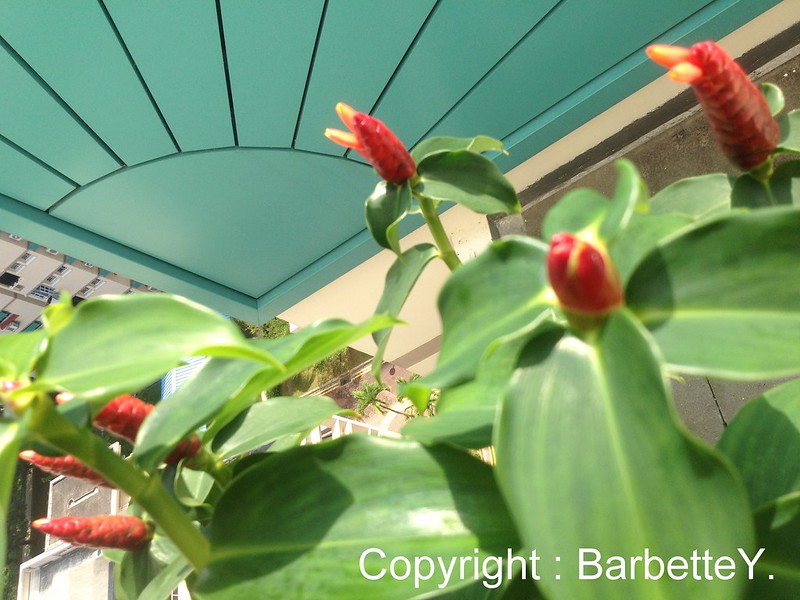
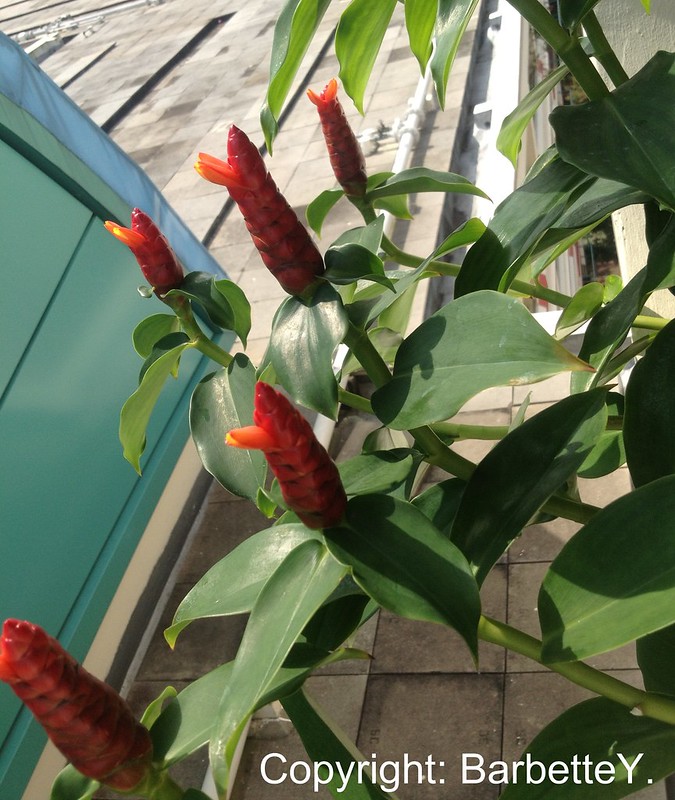
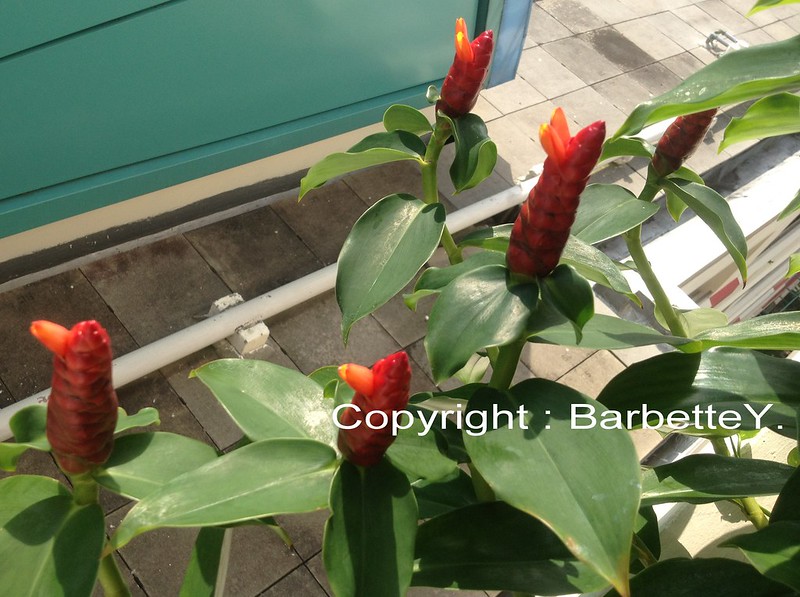
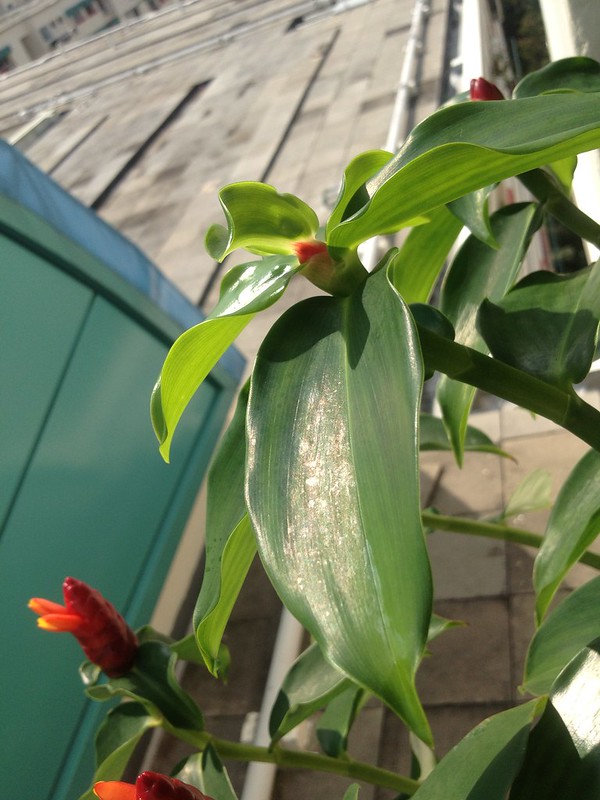
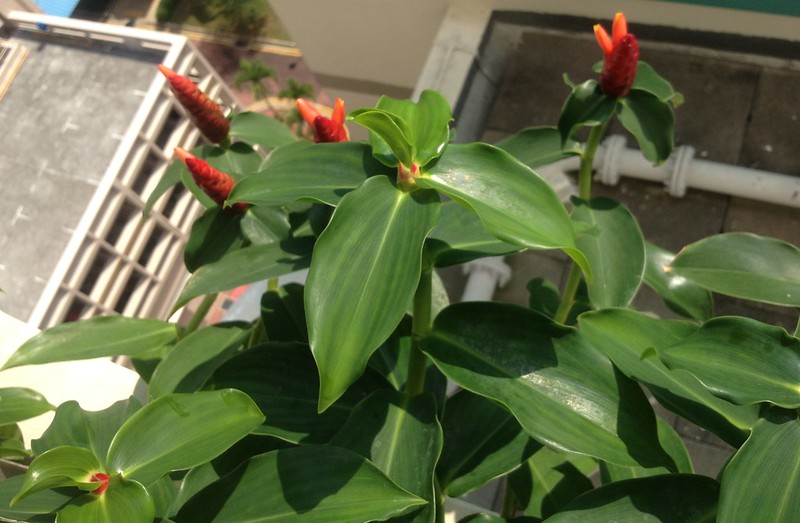
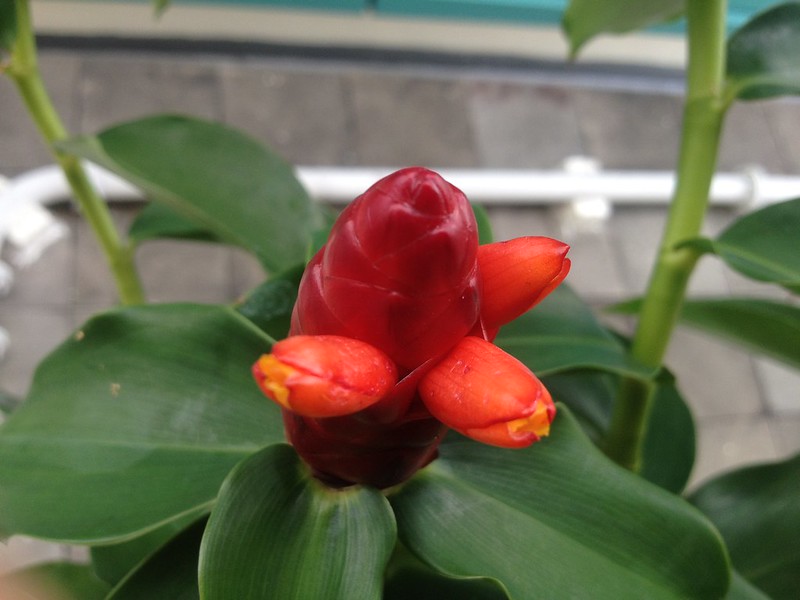
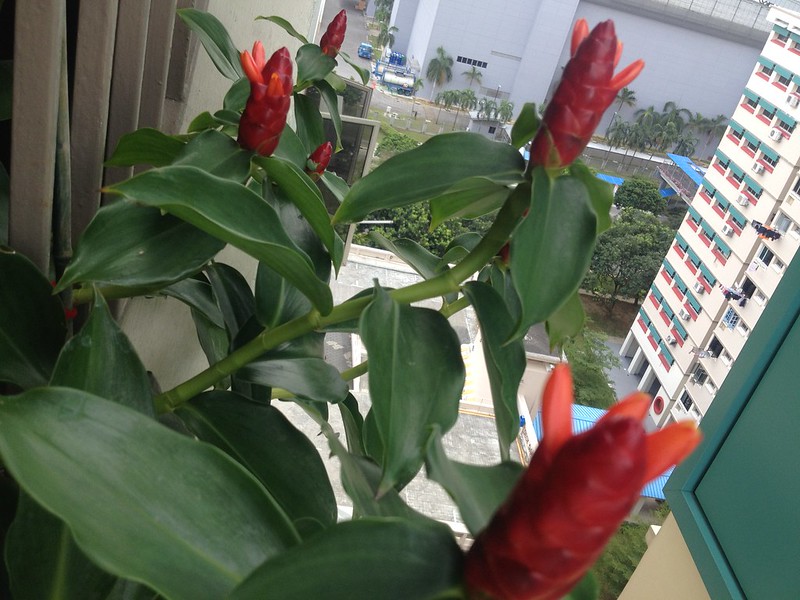
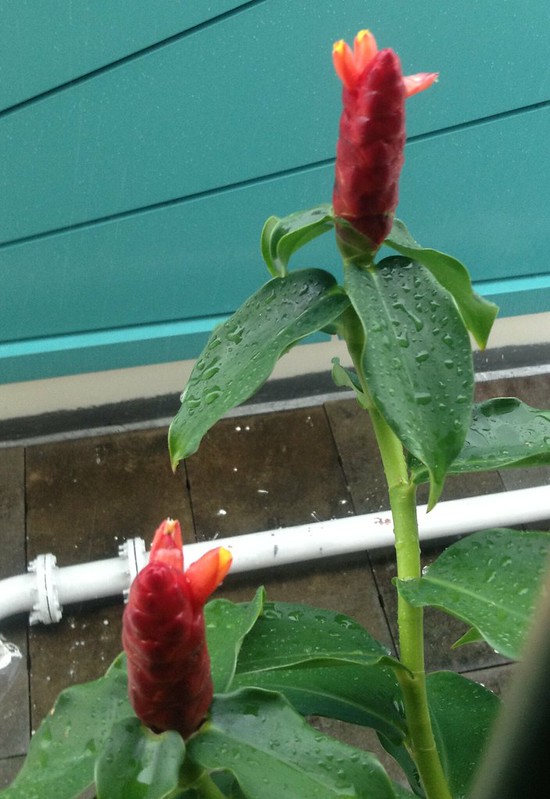
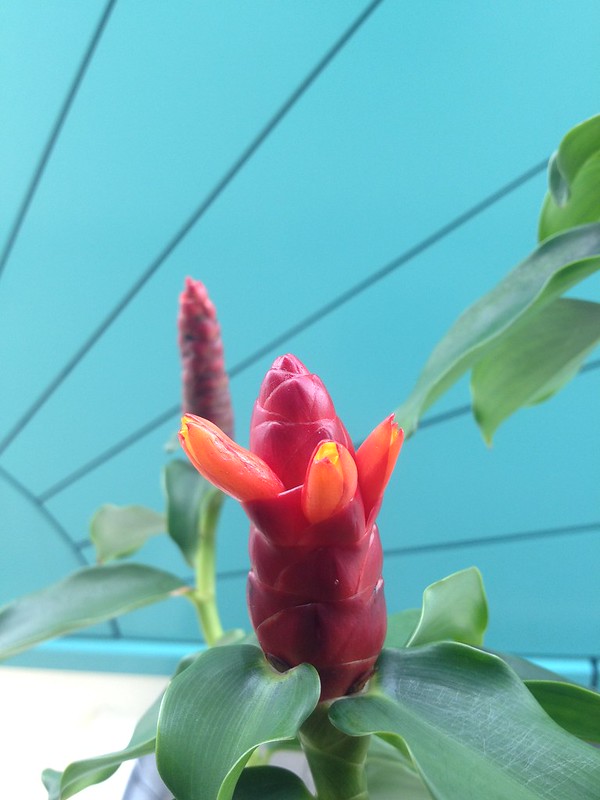
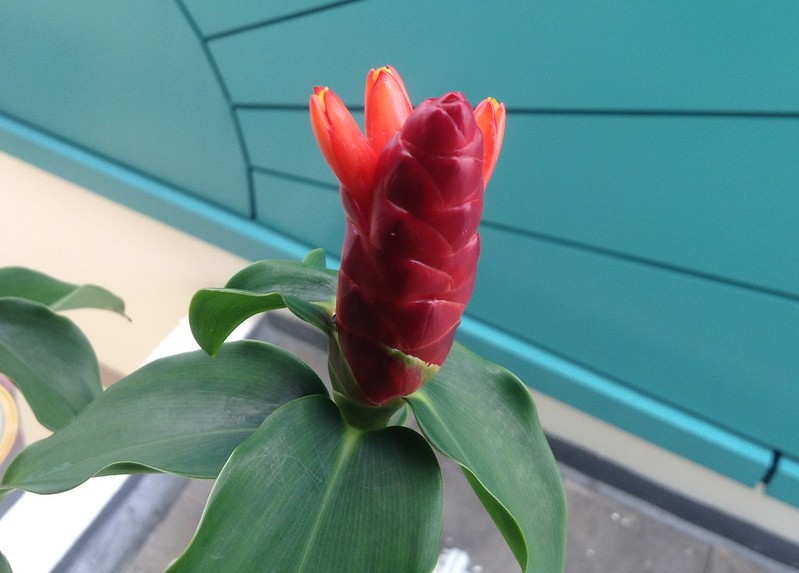
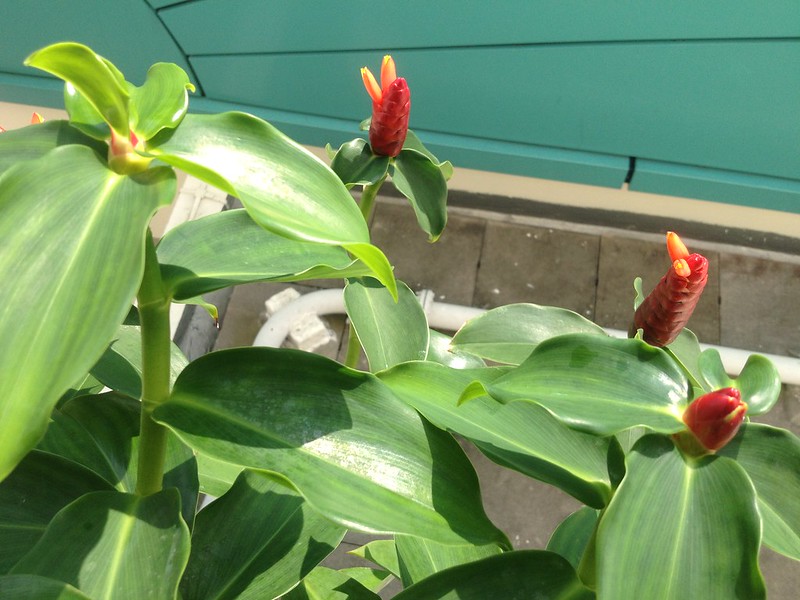
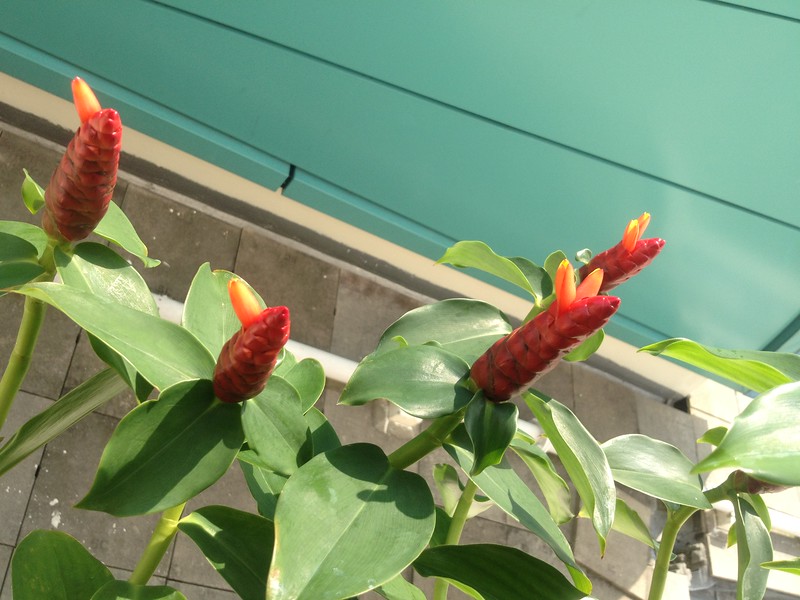
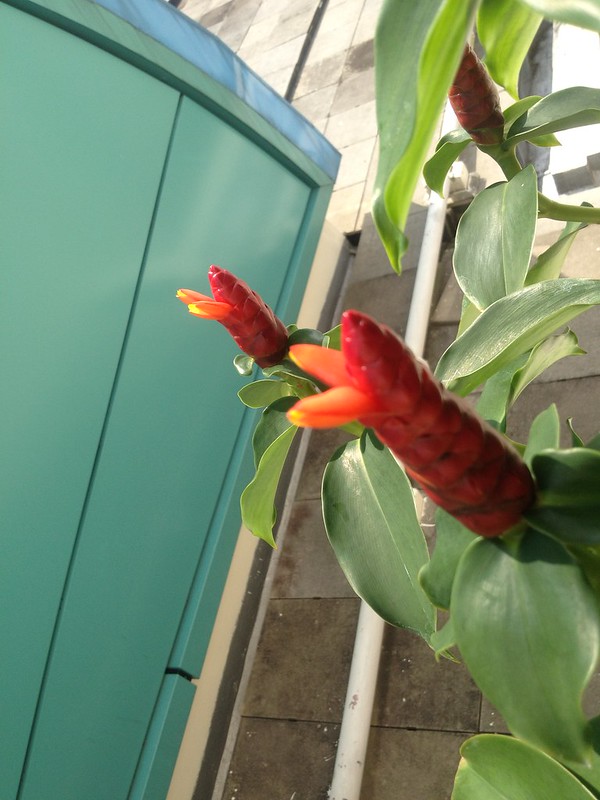
A free flow of photographs of my Ginger plants

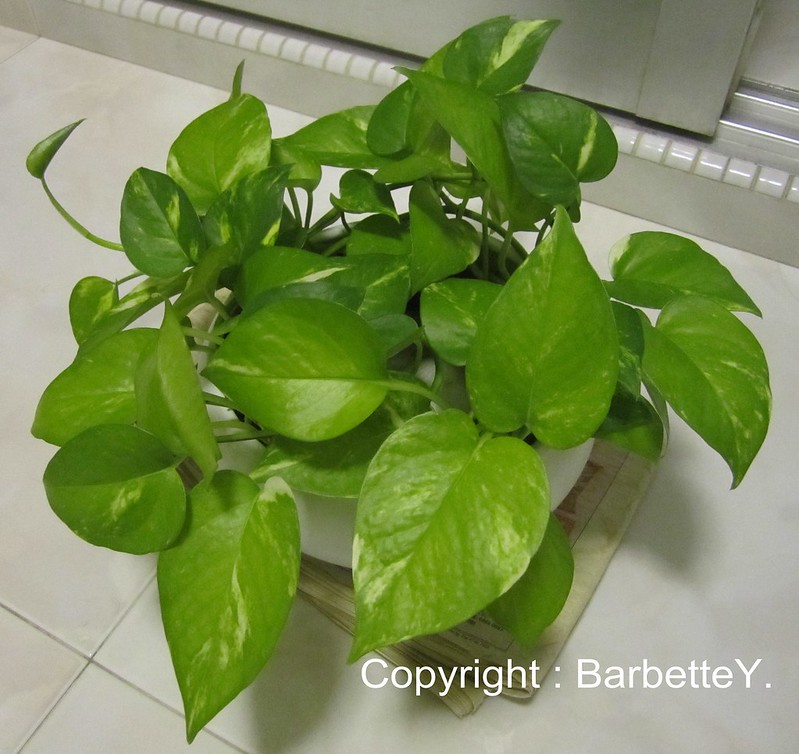
You'll have noticed by now that I haven't really mentioned anything about my evergreen money plant ... Perhaps it was repotted on a dampy sort of soil which has a very strong stench of urea, and it doesn't catch on much sunlight at its location, it wasn't growing vigorously... Since its progression was somewhat slow-going or passive, I had as a result, overlooked it...

By the time it was being brought down to the community garden, it was too late as it seems to have died even though the RC member (an elderly aunty with green fingers) repotted it & placed it at a supposedly ideal location.

We trim off a section of the "tendrils" where the baby leaves were growing out from & placed it in a bowl of water with oyster shells & those of the giant, deep-sea scallop which we brought home after a huge feast of seafood buffet at shangrila hotel.

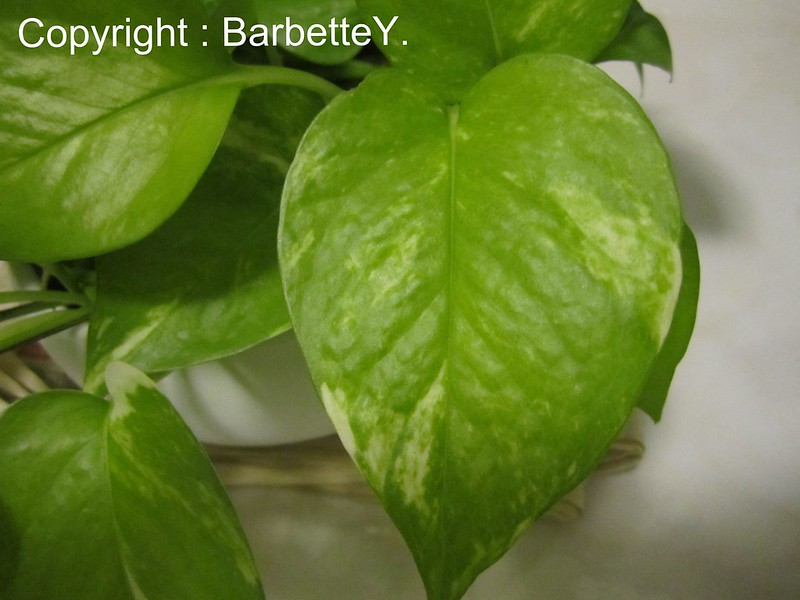
Surprisingly, under my hubby's somewhat negligent style of care, the money plant is surviving even though we did notice that it seems to have inherited the jaundiced appearance of the parent plant!

The leaves that grew out didn't look dark greenish.  Instead, they had a yellowy tinge to their leaves as illustrated in the photographs below:


It doesn't look as yellowy in the photographs.  However, in reality, the leaves had a yellowy appearance.
Perhaps the cause for the jaundice appearance is a result of a lack of sunlight?

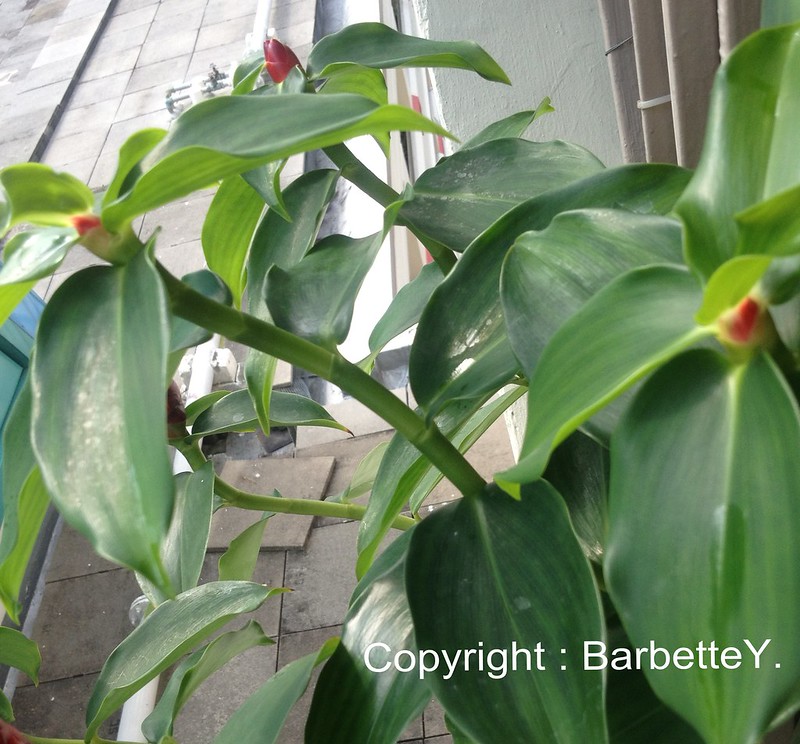
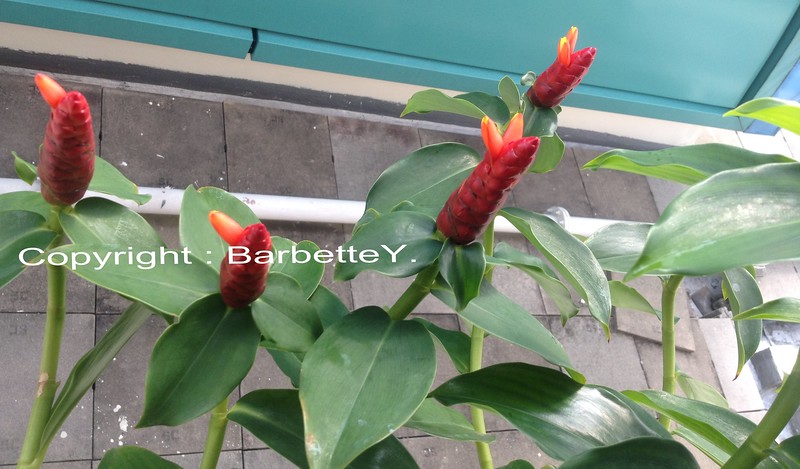
Here's a free flow of my ginger plants in bloom ...  It's a feast to one's eyes when we set our sight on them! :)


Oh dear, editing using the Aviary Tool is soooooooooo user unfriendly & slow-moving with unexpected alignment issues when editing that I had to forgo water-marking my photographs with copyright. :(


Monday, April 23, 2012

The story of My "tree" musketeers - Signs of ailing health

After pruning off stalks which had aged beyond their ability for further growth, we were pretty relieved that new shoots had made its way out of the surface of the soil.

However, we did notice that these new shoots aren't as healthy as before because one of them came up with holes "burnt" into the stem as shown in the photograph below.

Posted Image


The rest of the green shoots seemed to have a reasonably healthy appearance as shown in the photographs attached below:
Posted Image

Posted Image

Posted Image

Posted Image

Sunday, April 22, 2012

The Yellow ladybird - A faithful friend of my ailing plants

This regular visitor who is a friendly companion to my "Ginger" plants was seen frequently by myself.
Posted Image

Isn't it cute?

Doesn't it remind us all of the Volkswagen beetle as shown here in the photograph below?
Posted Image

Disclaimer: I do not own the photograph featuring the Volkswagen yellow bettle as shown above. Kindly give full credits to the owners of this image. Thank you.


More photographs of my "Ginger" plants in a state of blooming :

Posted Image

Posted Image

The Olive-backed Sunbirds' feast

There was a great feast for those olive-backed sunbirds today.

A hole which is clearly seen on every flower is a clear indication that the sunbird/s had already extracted the nectar. I believe they did it by "drilling" (piercing) a hole into the bud with their long sharp, needle-like beak.
Posted Image

After a heavy downpour yesterday, we were surprised that the "Ginger" plants were blooming vigorously. And as usual, we didn't manage to take any snapshots of the birds becox they would fly off the minute they sense any movements near the plants.

Even though the photographs of our "ginger" plants were repetitive in style, we hope that viewers would enjoy them as much as we do.

Posted Image

Posted Image

Posted Image

Posted Image

Posted Image

Posted Image

Posted Image 
Posted Image

Posted Image